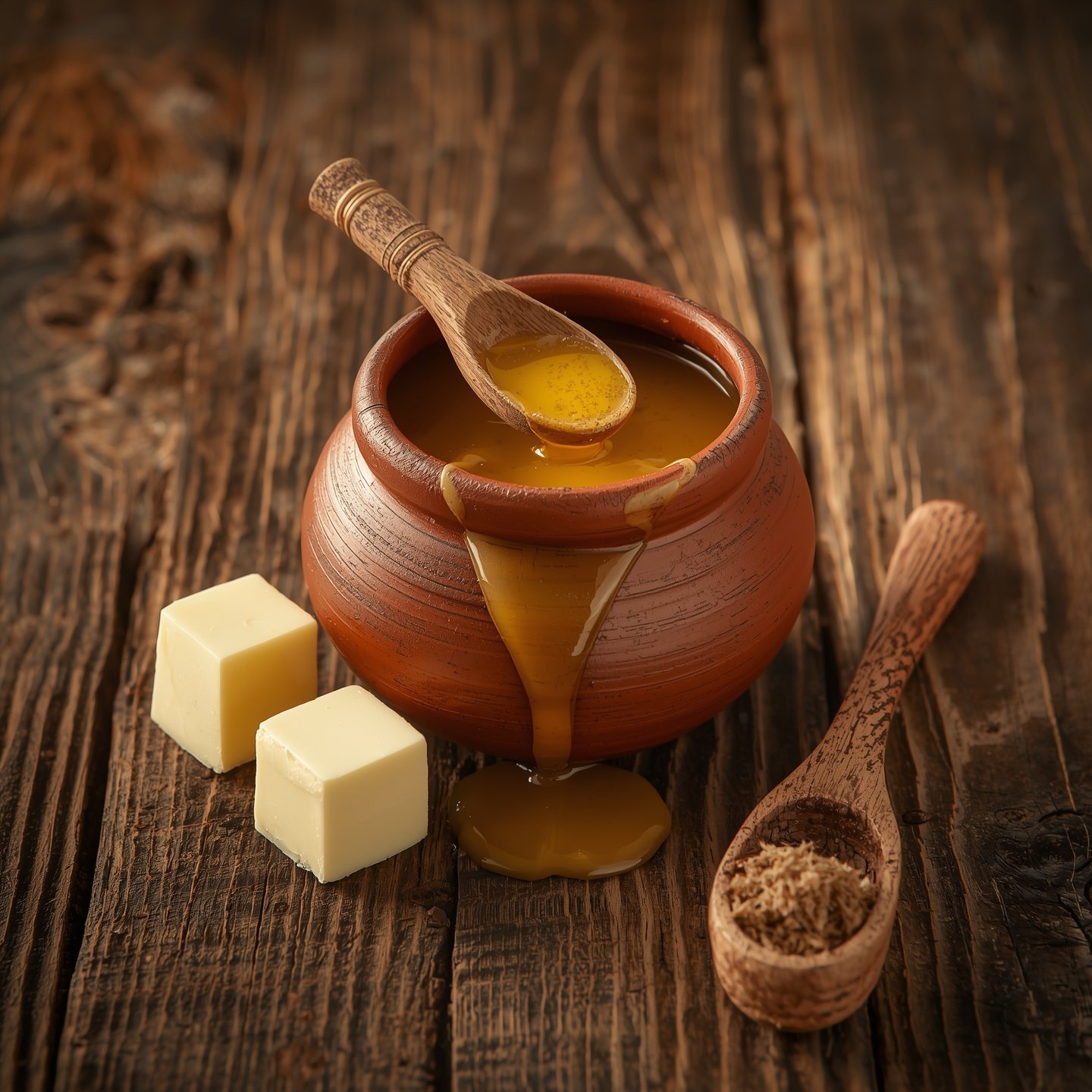
There is no single daily amount of ghee that is correct for every person. Needs depend on total calorie intake, age, activity, health status and the other fats in the diet.
Why a universal number can be misleading
Ghee is concentrated in fat and calories. Someone who already consumes butter, cream, fatty dairy or other cooking fats may need a different amount than someone whose diet contains less saturated fat.
A practical portion approach
- Start with a small measured serving.
- Count ghee as part of your overall cooking fat intake.
- Do not assume more ghee means more health benefit.
- Follow a clinician’s dietary advice if you have been asked to limit saturated fat or total fat.
What Indian guidelines say
The National Institute of Nutrition’s 2024 Dietary Guidelines discuss ghee and butter as sources of saturated fat and caution against excessive visible fat intake. This supports a moderate, portion-aware approach.
Sources & further reading
- WHO: Saturated fatty acid and trans-fatty acid intake
- ICMR–National Institute of Nutrition: Dietary Guidelines for Indians
Health disclaimer: This article is for general education only. It is not a diagnosis, treatment or personalised diet plan. If you have a medical condition or specific dietary restriction, consult a qualified healthcare professional.