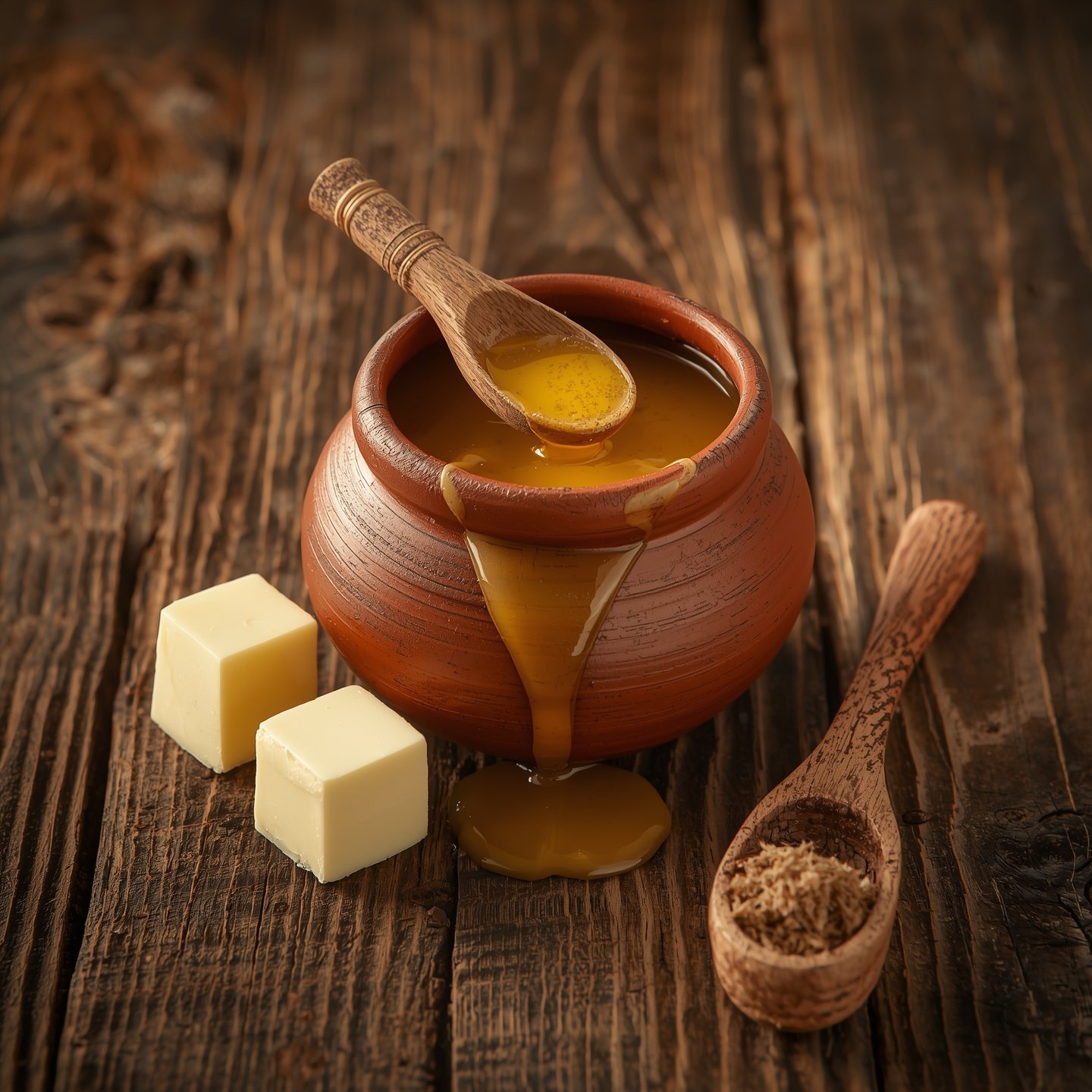
Ghee is a traditional cooking fat, but it should not be treated as a heart-health supplement. The important question is how much saturated fat and total fat you consume across your whole diet.
Why saturated fat matters
Ghee contains saturated fatty acids. WHO recommends that adults and children reduce saturated fat intake to no more than 10% of total energy, with further reduction possible in some contexts. WHO also recommends replacing saturated fat with healthier unsaturated fats or fibre-rich carbohydrate sources.
Does eating ghee automatically cause heart disease?
One food does not determine an individual’s heart-health outcome. Your overall eating pattern, activity, smoking status, body weight, blood pressure, blood lipids, diabetes status and other factors matter. That is why we avoid saying that ghee “cleans arteries” or “protects the heart.” Such claims are not appropriate product promises.
How to use ghee thoughtfully
- Use a measured amount rather than pouring freely.
- Balance meals with vegetables, pulses, whole grains, nuts and other nutrient-rich foods.
- Choose unsaturated oils as part of your overall fat pattern where appropriate.
- If your doctor has advised you to restrict saturated fat, follow that advice.
Bottom line
Enjoy ghee for taste and culinary tradition if it fits your diet, but keep portions and total saturated fat in mind.
Sources & further reading
- WHO: Saturated fatty acid and trans-fatty acid intake
- ICMR–National Institute of Nutrition: Dietary Guidelines for Indians